
EcoSense – SDG 3 Lesson Plan
Lesson topic: Healthy Habits Challenge
SDG 3 – Good Health and Well-being
Target group | 13–15-year-old students |
Duration | 45–50 minutes |
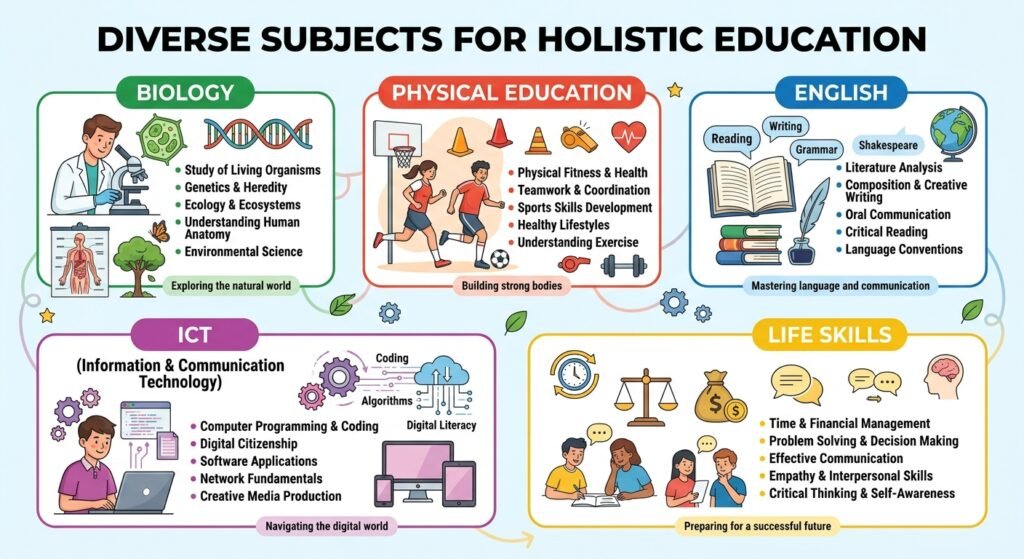
Integrated subjects | Biology, Physical Education, English, ICT, Life Skills |
Learning format | Interactive, collaborative and reflective learning |
Lesson aim
To help students understand how everyday habits – sleep, physical activity, hydration, nutrition, rest and screen-time balance – influence physical and emotional health and well-being.
Learning objectives
- Identify the main habits that support good health and well-being.
- Distinguish between healthier and less healthy everyday choices.
- Explain how sleep, movement, hydration, nutrition and rest affect well-being.
- Analyse a teenager’s daily routine and suggest realistic improvements.
- Reflect on personal habits and choose one achievable healthy change to try.
Materials and digital tools
- Computer and projector
- Students’ smartphones or tablets
- Mentimeter – opening word cloud / brainstorm
- Wordwall – “Healthy or Unhealthy?” sorting activity
- Blooket – short knowledge-check quiz
- Worksheet or digital form for the daily-routine task and self-reflection
Lesson procedure
- Warm-up – Mentimeter brainstorm (5 min)
Students respond to the question: “What does a healthy lifestyle mean to you?” They enter 2–3 words or short phrases. The class briefly observes the word cloud and discusses which ideas appear most often. The teacher highlights that health includes both physical and emotional well-being.
- Short introduction to the topic (5 min)
The teacher introduces five key areas: Sleep – Movement – Water – Food – Rest/Screen balance. Each area is explained with one short practical idea rather than a long theoretical explanation.
- Interactive activity – Healthy or Unhealthy? (7 min)
Using Wordwall, students sort everyday behaviours into “Healthy habit” and “Unhealthy habit”. Examples may include sleeping 8 hours, drinking water, eating breakfast, being physically active, spending many hours on a phone before sleep, skipping meals, drinking energy drinks daily and taking regular screen breaks. The class briefly discusses any debatable examples.
- Group task – A Day in Alex’s Life (10–12 min)
Students work in small groups. They receive a short description of Alex’s day: Alex wakes up at 7:00, skips breakfast, drinks very little water, sits in lessons for six hours, plays computer games for four hours after school, does no physical activity and goes to bed at 00:30. Groups identify at least five habits that could be improved, explain why, and redesign Alex’s day in a healthier and realistic way.
- Individual activity – My Healthy Habits Check (7 min)
Students privately reflect on their own habits: sleep, hydration, physical activity, breakfast, screen breaks, time outdoors and relaxation without a phone. Response scale: Always / Often / Sometimes / Rarely / Never. This is not graded and is used only for self-reflection.
- Blooket – Quick knowledge check (5–7 min)
Students complete a short quiz of 6–8 questions. The quiz checks understanding of the main ideas from the lesson, for example the importance of sleep, hydration, physical activity and balanced daily routines.
- Reflection – One small change (3–5 min)
Students complete two sentences: “One healthy habit I would like to improve is…” and “This week I will try to…”. They choose one small, realistic change rather than a difficult long-term goal.
Assessment
- Formative observation during discussion and group work.
- Accuracy and reasoning in the Wordwall and Blooket activities.
- Ability to identify and explain habits that influence well-being.
- Quality and realism of the suggested improvements to Alex’s daily routine.
- Personal reflection and selection of one achievable healthy habit.
Final learning outcome
Each student leaves the lesson with one concrete and realistic health-related action to try during the following week. The lesson promotes awareness, personal responsibility and practical decision-making without judging students’ individual lifestyles.
Connection to SDG 3 and EcoSense
The lesson supports SDG 3 – Good Health and Well-being by linking everyday choices with physical and emotional health. It follows the EcoSense approach through interactive digital tools, collaborative problem-solving, personal reflection and a simple real-life action that students can apply beyond the classroom.
Teacher note: Keep the tone supportive and non-judgemental. The purpose is to help students notice patterns and make realistic choices, not to compare or grade personal lifestyles. |