EDUCATIONAL ACTIVITY PLAN
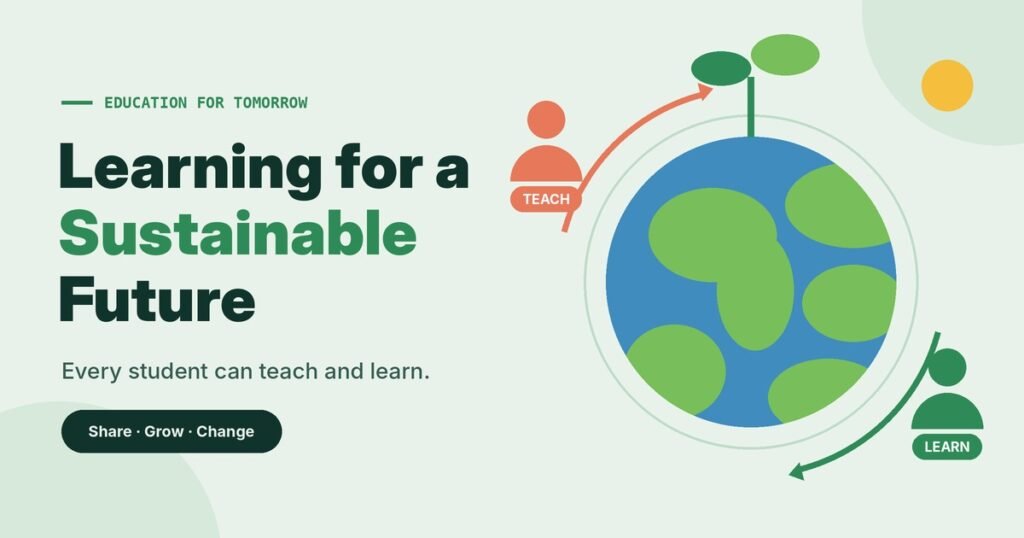
TOPIC: | Learning for a Sustainable Future – Every Student Can Teach and Learn |
CLASS / DURATION / PREPARED BY: | Grades 7–9; 1 lesson; Prepared by: Zita Nichtová, ZŠ Starý Tekov |
LEARNING TASK
Students work in small international or mixed-ability teams to create a simple, creative learning resource that teaches other students one sustainable habit. They choose an environmental topic, prepare a mini-poster or learning card, and explain their idea to their classmates.
The main question is: How can education help us build a better and more sustainable world?
Students learn that quality education should be inclusive, engaging, practical and accessible to everyone.
GOALS ACCORDING TO THE GENERAL CURRICULUM
- To understand the importance of quality education for sustainable development.
- To develop communication, collaboration, creativity and critical-thinking skills.
- To apply knowledge about sustainability to everyday life.
- To promote equal learning opportunities, inclusion and respect for different abilities and ideas.
- To use acquired knowledge to educate others and encourage responsible behaviour.
General competences
- Students express their ideas clearly, explain environmental problems and present practical solutions in English.
- Students work in teams, listen to others, share responsibilities and respect different opinions and learning needs.
- Students select relevant information, solve simple problems, reflect on what they have learned and apply their knowledge in real-life situations.
Subject competences
- Students use simple English vocabulary and sentences related to education, sustainability and environmental protection. They write short instructions and present their ideas orally.
- Students identify everyday environmental problems and suggest sustainable solutions connected with school, home and the local community.
- Students select and organise information and, where available, use digital tools to prepare or share a learning resource
Integration with other subjects
- English: Vocabulary, sentence formation, writing instructions and oral presentations.
- Geography: Environmental challenges, sustainable development and responsible use of natural resources.
- Informatics: Creating a digital poster or learning card and sharing work online.
- Civics: Equal opportunities, inclusion, cooperation and responsibility.
- Art: Visual communication, poster design and creative presentation.
MATERIALS / EQUIPMENT
Paper, markers, coloured pencils and sticky notes, prepared worksheets or blank learning-card templates, reusable materials or pictures illustrating environmental problems, computers, tablets or smartphones, if available, optional digital tools such as Canva or PowerPoint.
LEARNING ACTIVITIES
Activity 1: What Makes Education Good? (5 minutes)
The teacher asks students:
- What makes a lesson interesting?
- Should every student have the same opportunity to learn?
- Can learning help us protect the planet?
Students share short answers. The teacher introduces SDG 4 – Quality Education and explains that everyone deserves opportunities to learn and develop their skills.
Activity 2: Choose Your Eco-Learning Mission (5 minutes)
Students form teams of 3–4 and choose one topic:
- Save water at school.
- Reduce food waste.
- Reuse things instead of throwing them away.
- Save energy at home.
- Protect animals and plants.
- Make learning easier and more inclusive for everyone.
Each team identifies one problem and thinks of a practical solution.
Activity 3: Teach Someone Something! (15 minutes)
Each team creates a mini learning card or poster to teach other students about its chosen topic.
The resource must include:
- A short, catchy title.
- One environmental problem.
- Three simple tips or solutions.
- A drawing, symbol or picture.
- One memorable message in English.
Example:
SAVE WATER, SAVE LIFE!
- Turn off the tap when brushing your teeth.
- Use water carefully.
- Report leaking taps.
Every drop counts!
Students can make the resource on paper or digitally. They should make it easy to understand, even for younger pupils or learners who need extra support.
Activity 4: The 60-Second Teaching Challenge (10 minutes)
Each team has one minute to teach its classmates the three most important things about its topic.
The other students listen and identify one new thing they have learned.
After each presentation, classmates give one positive comment and one suggestion. The teacher encourages simple, clear English and values participation, not just perfect language.
Activity 5: Our Knowledge for the Future (10 minutes)
Students reflect on how education can change people’s behaviour and help the environment.
Each student completes two sentences:
- Today I learned that…
- One thing I can teach someone else is…
REFLECTION. ASSESSMENT
Expected learning outcomes: By the end of the lesson, students can explain the importance of quality education, identify at least one environmental problem, propose practical solutions in English, collaborate with classmates and create a simple educational resource that can be shared with the wider school community.
Assessment methods
- Teacher observation of participation, communication and teamwork.
- Assessment of the learning card or poster.
- Individual reflection at the end of the lesson.
Student self-assessment: Students rate themselves from 1 (not yet) to 5 (very well).
- I can explain why quality education is important.
- I can suggest ways to make everyday life more sustainable.
- I can cooperate with others and share my knowledge.
- I can teach someone else something useful in English.
APPENDIX 1
Simple assessment criteria:
Criteria | Achievement |
Sustainability knowledge | Identifies a problem and suggests practical solutions. |
English communication | Uses understandable words and sentences. |
Teamwork | Cooperates and contributes to the group task. |
Creativity and clarity | Creates a useful, easy-to-understand learning resource. |
Reflection | Explains what was learned and how it can be applied. |
|
|