EDUCATIONAL ACTIVITY PLAN
TOPIC: | Life below water: protecting marine ecosystems (SDG 14) |
CLASS / DURATION / PREPARED BY: | Grades 8–9; 1 lesson (45 minutes); Prepared by: |
LEARNING TASK
After reading an informational text about oceans, students identify key threats to marine life and explain—using target vocabulary—how people can protect life below water. In pairs, they create a short “Save the Sea” action message (3–4 sentences) combining English skills with biology knowledge.
GOALS ACCORDING TO THE GENERAL CURRICULUM (2008)
General competences
- Learning to learn: students purposefully work to implement the lesson task, evaluate their learning progress, and use the indicated learning tools.
- Cognitive: they choose and apply inquiry methods, explore safely.
- Social: they cooperate constructively to achieve a common goal, create and maintain friendly relationships, show empathy and help others.
- Personal: they trust themselves, know how to concentrate their efforts to achieve set goals, behave safely, and are able to foresee the consequences of their behaviour.
Subject competences
- Read an informational text about oceans and identify the main idea, key details, and cause–effect links (English).
- Use topic vocabulary (marine species, habitats, pollution, overfishing, conservation) correctly in speaking and writing (English).
- Explain basic marine ecosystem concepts (habitats, food chains, biodiversity) and give examples (Biology).
- Describe how human activities affect ocean ecosystems and suggest realistic solutions (Biology + Citizenship).
- Work collaboratively to plan and present a short action message promoting sustainable behaviour (English communication).
Integration with other subjects
Biology, Geography (oceans and climate), Civic education (responsible consumption), ICT/Art (creating a short campaign message).
MATERIALS / EQUIPMENT
Projector/interactive board, slides or photos of marine habitats/animals, printed reading text and worksheet (Appendices 1–2), vocabulary cards (optional), dictionaries/phones for quick word check, paper or digital template for the “Save the Sea” message.
LEARNING ACTIVITIES
(45-minute lesson; English–Biology integrated.)
- Warm-up (5 min). Show 2–3 images of ocean life and pollution. Students answer: What do you see? What might be the problem?
- Pre-reading vocabulary (7 min). Students match key words with definitions (Appendix 2, Task A). Quick check in pairs; teacher clarifies meaning/pronunciation.
- Reading & comprehension (20 min). Students read the text “Life below water” (Appendix 1), underline threats/solutions, then complete true/false and short-answer questions (Appendix 2, Tasks B–C).
- Biology link (8 min). In groups, students complete a table about marine habitats, organisms, and threats (Appendix 2, Task D) and explain one simple food-chain example.
- Speaking & writing (5 min). Pairs create a 3–4 sentence “Save the Sea” message using at least 5 target words and one modal verb (must/should/can). Share a few examples. Exit ticket + reflection (Appendix 3).
REFLECTION. ASSESSMENT
Reflection. Students complete their reflection by finishing the sentences:
- In this lesson I learned that…
- It was interesting that…
- I would like to learn more about…
- Today I did well when… / Next time I will try to…
APPENDIX 1
Reading text: Life below water (SDG 14)
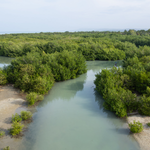
Oceans cover about 71% of Earth and are home to millions of living organisms—from tiny plankton to whales. Marine plants and plankton also produce a large part of the oxygen we breathe, and oceans help regulate the climate by absorbing heat and carbon dioxide. Different habitats support different kinds of life: coral reefs are like busy underwater cities, mangrove forests protect coastlines and give young fish a safe place to grow, and the open ocean connects food chains across the planet.
However, life below water is under pressure. Plastic waste breaks into microplastics that animals can mistake for food. Overfishing reduces fish populations, and bycatch (animals caught by accident) can kill turtles, dolphins, and seabirds. Warmer water and ocean acidification can damage coral reefs, leading to coral bleaching. In some areas, too many nutrients from farms and cities cause algae blooms that remove oxygen from the water, creating “dead zones” where few organisms can survive.
Table. Main threats to oceans and possible solutions
Threat | What it is | Impact on marine life | What we can do |
Plastic pollution / microplastics | Plastic waste breaks into tiny pieces. | Animals may eat it; it can harm health and food chains. | Reduce single-use plastic; recycle; clean-ups. |
Overfishing | Catching fish faster than they can reproduce. | Fish populations fall; ecosystems become unbalanced. | Choose sustainable seafood; follow fishing limits. |
Bycatch | Non-target animals caught accidentally. | Turtles, dolphins, seabirds can be injured or killed. | Use safer fishing gear; support better fishing practices. |
Warming seas | Higher ocean temperatures due to climate change. | Changes habitats; can lead to coral bleaching. | Save energy; lower emissions; protect habitats. |
Ocean acidification | More CO₂ makes seawater more acidic. | Shell-building animals and corals struggle to grow. | Reduce CO₂ emissions; protect blue-carbon habitats. |
Nutrient pollution / algae blooms | Too many nutrients from farms/cities enter water. | Oxygen drops; “dead zones” form. | Reduce fertilizer runoff; improve wastewater treatment. |
Habitat destruction | Reefs, seabeds, and coasts are damaged. | Loss of breeding areas and biodiversity. | Create marine protected areas; responsible coastal planning. |
Protecting the oceans is possible—and everyone can help. We can reduce single-use plastic, recycle correctly, and choose reusable bottles and bags. We can support sustainable seafood and respect fishing rules that allow fish populations to recover. Governments and communities can create marine protected areas where ecosystems can restore themselves. Schools and families can join beach or river clean-ups and share information about ocean-friendly choices.
When we protect marine biodiversity, we also protect our own future—because healthy oceans support food, jobs, and a stable climate.
Read the text and complete the comprehension and vocabulary tasks in Appendix 2.
APPENDIX 2
Student worksheet (English–Biology)
- Task A – Vocabulary (match). Match the words to the definitions: habitat, biodiversity, coral reef, overfishing, bycatch, microplastics, algae bloom, marine protected area, sustainable, endangered.
- Task B – True / False. Read the text again and decide if the statements are True or False. Correct the false ones.
- Task C – Short answers. Answer the questions in complete sentences (2–3 lines each): 1) Why are oceans important for people? 2) Name three threats to life below water. 3) What is bycatch? 4) Give two solutions that students can do.
- Task D – Biology link. Complete the habitat table below. Then choose one habitat and explain a simple food chain (example: plankton → small fish → bigger fish → shark).
Table. Marine habitats and key features
Habitat | Example organisms | Why it matters | Main threat |
Coral reef | Corals, reef fish, sea urchins | High biodiversity; supports food chains and tourism | Warming/bleaching; pollution |
Mangrove forest | Young fish, crabs, birds | Nursery for fish; protects coasts from storms | Cutting trees; coastal building |
Open ocean | Plankton, tuna, sharks, whales | Connects global food webs; stores heat and carbon | Overfishing; plastic |
APPENDIX 3
Assessment criteria (10 points)
Explain the criteria to students (what is expected and what 1 point means).
- Reading comprehension tasks (Tasks B–C) – up to 5 points.
- Vocabulary use and accuracy (Task A + using target words in the message) – up to 3 points.
- Collaboration + “Save the Sea” action message + reflection/exit ticket – up to 2 points.