Explore All Lessons
Clean water and sanitation: protecting health and our future

Main idea: students read about drinking water treatment, wastewater, sanitation, hygiene, and create a mini action plan.
Sustainable Development: Natural Indicators and Good Health (SDG 3)
Students investigate how natural indicators can help assess environmental conditions that affect human health and well-being, understand the links between sustainable development and healthy living, and apply inquiry-based learning to evaluate the acidity/alkalinity of everyday substances.
Life below water: protecting marine ecosystems (SDG 14)
After reading an informational text about oceans, students identify key threats to marine life and explain—using target vocabulary—how people can protect life below water. In pairs, they create a short “Save the Sea” action message (3–4 sentences) combining English skills with biology knowledge.
Responsible consumption and production (SDG 12)
Students will read two short informational texts about Responsible Consumption and Production (SDG 12), complete reading comprehension tasks, practise key vocabulary, and work in groups to create a simple ‘Responsible consumer’ action plan for their school/home.
Sustainable cities and communities (SDG 11)

Students will read two short informational texts about Sustainable Cities and Communities (SDG 11), complete reading comprehension tasks, practise key vocabulary, and work in groups to propose simple actions that can make their town/school more sustainable.
Clean water and sanitation
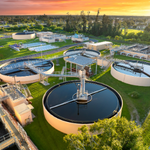
Students will read two short informational texts about Clean Water and Sanitation (SDG 6), complete reading comprehension and vocabulary practice tasks, and create a mini ‘Water & Hygiene Action Plan’ for their school/community.
Minerals and Rocks – origin, extraction, use, and connections to sustainable development
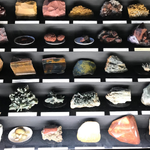
“The Journey of a Smartphone – What minerals do we need, and what is the global cost?”
Students explore the minerals used in everyday electronics and assess the environmental and social consequences of their extraction.
Child labour – Understanding human rights – children´s rights through Mathematics, Geography and Ethics

Students will become familiar with the concepts of child labor, children's rights, and countries where these rights are violated. Students will work with percentages, ratios, tables, and graphs. They will learn to interpret real-world data and connect mathematics with global issues.
Zero Hunger – Understanding Food Security Through Science, Geography, and Ethics

Students work in groups to investigate factors that affect food security, examine nutrient content in foods (Science), map global hunger distribution (Geography), and debate fairness in food access (Ethics). They produce a short group poster summarizing solutions to hunger.
Industry, Innovation and Infrastructure
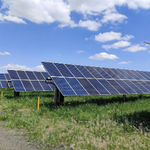
Working in groups, students will examine how innovation supports sustainable development, analyze examples of sustainable infrastructure, and propose an innovative solution for their community.
Gender Equality
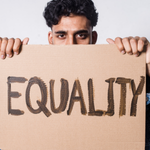
Working in groups, students will explore examples of gender equality and inequality, analyze data and real-life cases, and design awareness actions promoting equality.
Climate Action – Understanding Climate Change & Taking Action
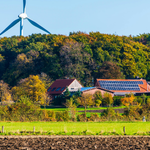
Working in groups, students will investigate factors contributing to climate change, analyze real-world data about carbon emissions, and design a simple climate-action proposal that could be implemented in their school or community.
Affordable and Clean Energy
Working in groups, students will investigate renewable and non-renewable energy sources, analyze energy consumption at school or home, and propose simple energy-saving actions.
Working Together for a Better World
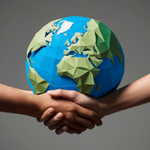
• Understand the meaning of “partnership” in a global context.
• Explain why cooperation is necessary to solve global problems.
• Identify examples of international and local partnerships.
• Collaboratively design a simple digital campaign promoting cooperation.
• Use digital tools to communicate ideas effectively.
Agenda 2030 – SDG 16: Peace, Justice and Strong Institutions
Understand the meaning of peace, justice, and strong institutions. Explore how conflict and corruption affect countries. Compare peaceful and unstable countries using simple indicators. Propose actions that young people can take to promote peace and fairness. Collaboratively create a short digital output (poster or mini campaign).
Protecting biodiversity

Students will explore the meaning of biodiversity and the importance of protecting land ecosystems. Through interactive digital tools and collaborative activities, they will identify environmental problems and design a simple digital poster presenting three practical actions to protect nature.
Digital Tools for the Future

Students will identify key digital skills and tools needed in the future and collaboratively design a short “Future Skills Mini-Poster” explaining why these skills are important for education and work in 2030